

finding time to write while working a busy full-time job


It’s a Sunday evening and I’m sat in my London flat looking out of my window seat while the rain absolutely hammers against the glass. I can see people outside walking quickly with their heads down. My washing is drying on a rack that is permanently part of my interior decor. I’ve got a black coffee next to me and Law & Order is playing in the background because I like the noise of people solving problems while I try to solve my own.
It’s a Sunday evening and so, it’s time to write.
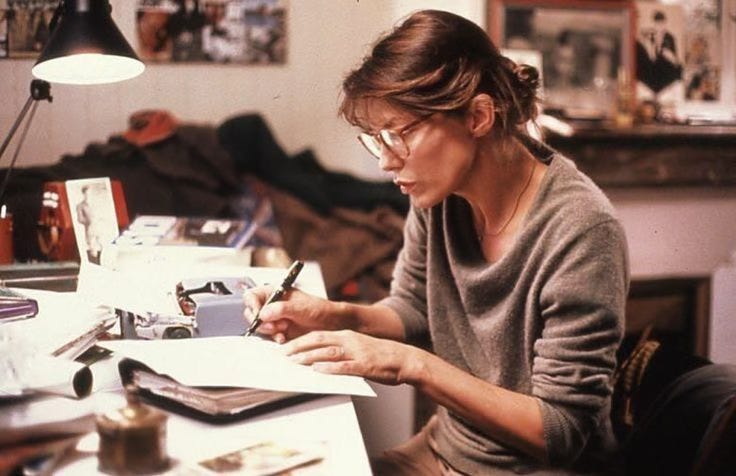
People often ask me how I manage to write as much as I do while working a full-time job and I always feel a bit awkward answering it because there isn’t a singular answer. There isn’t a system or a secret or a morning routine that starts at 5am with a celery juice.
For context, I work a fairly demanding full-time job that sometimes requires my attention beyond traditional working hours. That said, I don't have children and the only creatures depending on me are my cats. I know my free time looks very different to someone balancing childcare, caring responsibilities, or multiple jobs. This isn't a guide on how everyone should fit writing into their life, it's simply what works for me, and how I've managed to build writing into my week semi-consistently without it disappearing every time work or life gets busy.
Getting into a routine
As someone who thrives on routine but also somewhat resists it, I need structure but I also don’t respond well to rigid rules. So I’ve ended up somewhere in the middle: structure that bends, deadlines that are more like intentional suggestions, and writing targets that exist mainly to keep me from disappearing into my own brain for a week at a time.
I schedule my writing routine in a loose way. I aim for my writing days to be Monday, Wednesday, and Sunday in the evenings but sometimes I’ll write outside of that and other times I won’t write at all. My routine isn’t a strict military-calendar, it’s more like a gentle agreement with myself that says: these are the days where we try to show up and see what happens.
The writing rituals
And then there’s the ritual of it all, which might be my favourite part.
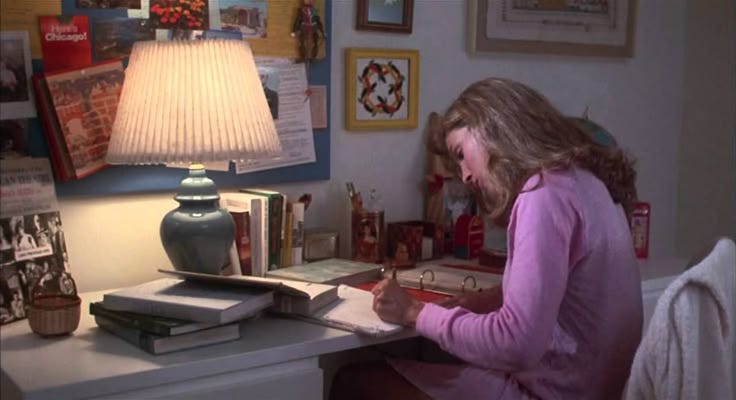
I tend to do the same small things before I write. I light the same candle, I make a black coffee, I sit on my window seat (which has become my unofficial writing spot) and I let myself settle into the idea that nothing else needs to happen right now except this. Except writing. Sometimes I put on healing frequency music if I want quiet focus, and sometimes I put on Law & Order because the sound of Olivia Bensons voice soothes me like no other.
My writing routine is not about productivity, it’s more like telling my brain: we’re safe, we’re here, we’re doing this now because we love it and we deserve to do something we love.
Writing starts before I sit down to write
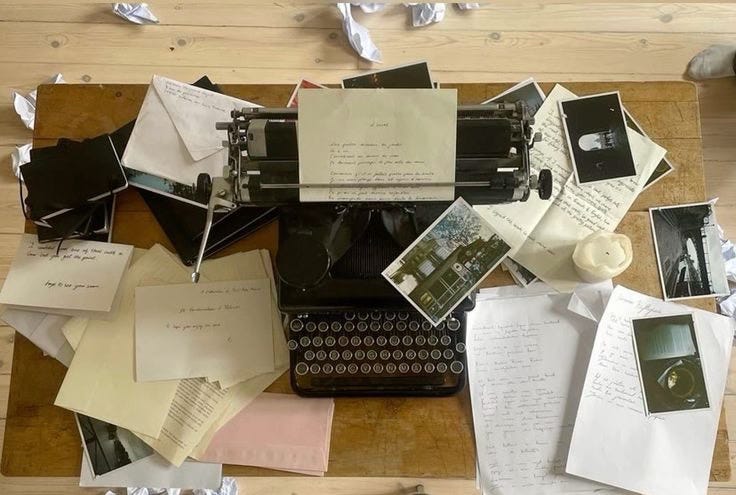
Most of what I write doesn’t start when I sit down at my laptop during these allotted writing-blocks. It starts earlier in much smaller, messier forms. I’m constantly writing things down in my notes app or notebooks. Little half sentences, ideas that feel important at the time, lines I think I’ll forget but never do, random observations that make sense only to me in the moment.
So, when I finally sit down to write properly, I’m never really starting from nothing. I’m starting from a collection of bits and pieces I’ve left for myself like little breadcrumbs. It feels a bit like opening drawers I forgot I organised, finding small versions of thoughts I had earlier in the week and trying to connect them into something that resembles a full shape.

Half-finished drafts are part of the process
I also don’t really finish things in one sitting. Sometimes i’ll work on something in my drafts for days or weeks, sometimes I enter a flow-state and just knock one out within a few hours if research isn’t required. I’ve learned not to judge myself too harshly. There’s something freeing about accepting that not everything has to be completed immediately to be valid. Equally, not everything has to take months to write in order to be meaningful.
I think writers sometimes romanticise the idea that our best work must be laboured over endlessly, rewritten a hundred times, and carried around like a precious secret before it's ready to see the light of day. And while it’s true that some pieces do need time, some of my favourite things I’ve written came together in a single sitting because they were simply ready to be written.
Sometimes the best thing you can do is stop worrying about whether a piece is important or perfect and just write for the sake of writing. You never know where it might take you.

A few substack specific tips!
Schedule posts in advance. If a piece is finished, schedule it. Future you will be grateful when work gets busy and you don’t have to think about publishing.
Keep a backlog of drafts. Not everything has to go live immediately. Having a few pieces sitting in your drafts means you can still publish during weeks when you don’t feel like writing.
Use your notes app/notebook as a second brain. Most of my articles for substack start as random thoughts, title ideas, opening lines, or observations typed into my phone throughout the week.
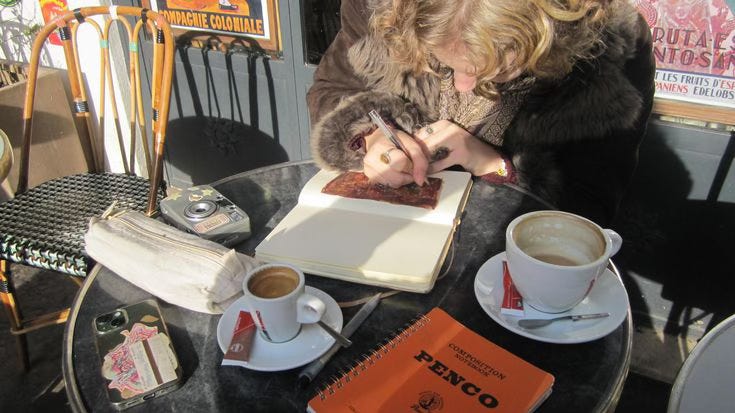
Take yourself on a writing date. Every now and then, I’ll spend a few hours in a café with no purpose other than writing. A change of scenery can work wonders.
Habit stack. Waiting for the laundry? Write for 45 minutes while it’s running. Cooking dinner? Jot down some ideas while things are in the oven. Small pockets of time add up.
Use voice notes on walks. If an idea arrives when I’m out walking, I’ll record a voice note for my future self. It’s surprisingly useful.
Remember your why. If you love writing, try not to turn it into another thing to optimise.
What I’ve stopped doing is expecting perfection from myself. I’ve learned that I don’t respond well to punishment. But I do respond well to gentle structure, to challenge, to the feeling that I’m moving forward even if it’s slowly.
I know this won’t work for everyone. I know some people need stricter systems, and some people need looser ones, and some people don’t have the kind of time I have to build rituals around writing at all. I don’t want to pretend there’s a universal way to do this. There isn’t. There’s just the way you do it.
For me, it looks like a window seat, horrendous posture, a candle I usually forget to blow out, half-finished drafts, and a notes app full of things I swore I’d come back to. It looks like carving out time in a life that is already full, and protecting it in a way that isn’t rigid but is still intentional. But most importantly it looks like showing up for myself even when I don’t feel like it. Especially when I don’t feel like it, because I never ever regret the time I carve out to write.
I can’t explain why I write because writing is my why. Writing just is the reason.
Thank you for this beautiful piece. The way you set the scene with the rain and the coffee felt so cozy, and it brought me a sense of real calm.
Thank you for this! Trying to get more into the habit of writing alongside a demanding job myself. Seeing other people are making it work is inspiring!